

If you’re running Amazon PPC campaigns and watching your ad budget disappear without seeing the returns you need, you’re dealing with the same problem thousands of sellers face every day.
Amazon PPC bid optimization!
It’s the difference between profitable campaigns and watching your money drain into clicks that don’t convert.
The truth is simple: manual bid management can’t keep up with the speed of Amazon’s marketplace. While you’re sleeping, your competitors are using automated tools that adjust bids every hour based on real-time performance data.
That’s why we’ve put together this guide to help you find the best Amazon PPC bid optimization software for your business.
TL;DR – 5 Best Amazon PPC Bid Optimization Software
Looking for the quick version? Here are the top Amazon PPC bid optimization solutions based on real seller feedback and feature analysis.
- Adlabs: Hands-on control with powerful bulk actions and zero aggressive automation.
- Scale Insights: Flat monthly pricing with solid rule-based automation (no percentage of ad spend).
- Pacvue: Enterprise-grade platform with multi-marketplace management and early access to Amazon betas.
- Adbrew: Innovative ruleset system with fast UI and Maximum Affordable Bid formula.
- Perpetua: Hands-off automation that adjusts bids based on budget consumption throughout the day.
Look, bid optimization tools are great. But implementing these strategies while managing your actual business is a full-time job.
Maybe your campaigns are leaking cash on keywords that’ll never convert. Maybe you’re underbidding on the gems that could make you category royalty. You won’t know until someone forensically audits your account.
That’s where we come in.
Our team at IG PPC uncovers the inefficiencies bleeding your budget dry, scouts untapped opportunities your competitors are missing, and hands you a battle plan that actually converts.
Get an Amazon PPC audit and let’s turn those clicks into profit.

What Is Amazon PPC Bid Optimization Software?
Amazon PPC bid optimization software automates the process of adjusting your advertising bids to improve campaign performance and reduce wasted spend.
These platforms connect to your Amazon Advertising account through the Amazon API and automatically adjust your bids based on performance data. Instead of logging into Seller Central every day to raise bids on converting keywords and lower bids on wasters, the software does it for you.
The technology pulls data on impressions, clicks, conversions, and sales. It analyzes which keywords perform well and which ones drain the budget. Then it sends bid adjustments back to Amazon through the same API connection.
Two types exist: AI-driven systems and rule-based systems.
- AI platforms use machine learning to spot patterns across thousands of keywords. They predict which clicks will convert and adjust bids accordingly. But they need data before they work properly, typically at least a month of campaign history with consistent sales.
- Rule-based systems execute if-then logic. For example: “If a keyword costs $50 with zero conversions, decrease the bid by 20%.” You control the rules. The system just runs them consistently.

Why Manual Bid Management Isn’t Sustainable Anymore
Manual bid management worked fine five years ago when Amazon PPC was simpler. But that time has passed.
According to Amazon’s official documentation, while most campaign metrics update hourly, critical performance data like sales and ACoS can take up to 48 hours to fully populate, and spend data may be adjusted for up to 3 days during traffic validation.
This means any decisions based on recent performance are likely to be made with incomplete information.
By the time you see accurate performance data and make changes, market conditions have already shifted. Your competitors are already three steps ahead with automated systems making hundreds of adjustments while you’re still analyzing last week’s data.
Experienced sellers confirm this reality. As one verified $10MM+ seller advised on Reddit: “NEVER EVER LOOK AT ANY DATA THAT IS FROM THE LAST 72 HOURS….EVER!”
This practical wisdom from high-volume sellers underscores why manual daily adjustments are fundamentally flawed.

Benefits of Using PPC Bid Optimization Tools
Automation delivers the following benefits when implemented correctly:
- Massive Time Savings: Professional sellers spend serious hours weekly on PPC campaigns. That’s time you could spend on product development, supplier relationships, or actually growing your business.
- True Scalability: The software doesn’t get tired, doesn’t make emotional decisions, and handles complexity you can’t manage manually.
- Around-the-Clock Optimization: Algorithms work while you sleep. They respond instantly when conversion likelihood spikes, optimize during high-traffic events automatically, and adjust to competitive changes in real-time.
- Consistent Decision-Making: Automated Amazon advertising systems apply optimization rules uniformly across all campaigns. They recognize patterns in larger datasets than humans can process and make decisions based purely on data, not gut feelings or fatigue.
- Reduced Ad Spend Waste: Smart algorithms identify and cut spending on non-converting keywords faster than manual review. They spot patterns in underperforming campaigns and reallocate budget to what’s actually working.

Features to Look For in Amazon PPC Bid Optimization Software
Not all bid optimization tools are created equal. Here’s what separates the best platforms from the rest:
- Automated Bid Adjustments: This is the core feature. These technologies are used for predictive analytics and real-time bid adjustments. Look for tools that can adjust bids multiple times per day based on performance trends.
- Keyword Harvesting and Negation: Keyword harvesting helps identify new, high-performing keywords. The best tools automatically discover winning search terms from your automatic campaigns and add them to manual campaigns with optimized bids.
- Dayparting Capabilities: AI-powered day parting optimization lets you increase bids during high-conversion hours and reduce them when customers aren’t buying.
- Placement Optimization: Optimized placements can help drive more orders from the placement with a better ACOS. The software should adjust bids differently for top of search, product pages, and rest of search placements.
- Multi-Marketplace Support: Multi-marketplace support has become essential for brands expanding globally. Leading platforms support multiple regions with unified dashboards, marketplace-specific optimization, and currency normalization for accurate comparison.
- Performance Analytics and Reporting: You want comprehensive data about the performance of your Amazon ad campaigns. The tool should have an all-inclusive reporting dashboard that helps you monitor your Amazon ads for all the key performance indicators (KPIs).
The best software combines multiple features into one platform, so you’re not paying for several different tools.

Top 5 Amazon PPC Bid Optimization Software
Before we get into the weeds, here is a bit of context around these tools.
After combing through dozens of Reddit threads, Quora discussions, and Amazon Seller Forums, we noticed something interesting: there’s no universal “best” PPC tool. What works incredibly well for one seller might fall flat for another, even if they’re in the same niche.
The real winners? Tools that give you control without drowning you in complexity, and automation that adapts to your specific goals rather than forcing a one-size-fits-all approach.
Below is a breakdown of the top PPC bid optimization tools based on real seller experiences, feature sets, and pricing structures.
| Tool | Best For | Pricing Model | Automation Level | Key Feature |
|---|---|---|---|---|
| Adlabs | Manual control with bulk actions | Subscription-based | Low (mostly manual) | SKU-level analytics |
| Scale Insights | Budget-conscious sellers | Fixed monthly fee | Rule-based | No percentage of ad spend |
| Pacvue | Enterprise-level accounts | Custom pricing | Medium-High | Multi-marketplace management |
| Adbrew | Rule-based optimization | Subscription-based | Medium | Fast UI and custom rulesets |
| Perpetua | Hands-off automation | Subscription-based | High | Budget-based bid adjustments |
| PPC Prophet | Basic automation tasks | Value pricing | Low-Medium | Detailed reporting |
| Helium 10 Adtomic | All-in-one suite users | Tiered subscription | Medium | Integrated with Helium 10 tools |
Now, let’s break down what actually sets these platforms apart and which one might fit your catalog, budget, and management style.
1. Adlabs

Adlabs stands out as the go-to choice for sellers who want granular control without full automation taking the wheel.
Unlike many competitors that push aggressive AI-driven bidding, Adlabs focuses on giving you the tools to make smart decisions yourself. The platform offers zero automation except for dayparting (scheduling ads for specific times of day), which means you’re always in control of your campaigns.
Now, you might be thinking: how does having less automation help? Well, the most experienced sellers out there prefer using their own formulas for bid optimization.
For example, in this Reddit thread, Mr_Ecom explained he’d “developed my own formulas and processes to optimize placements” and was specifically looking for manual software that wouldn’t override his methodology.
Another user, Glad-University-4759, shared that Adlabs’ formula (detailed in their white paper) creates a “base bid reduction” strategy: KW Bid = Target CPC × Campaign Placement Modifier, where the modifier is the worst placement’s CVR divided by campaign total CVR. They noted, “It’s been working great for me.”
Moreover, Adlab’s interface is clean and intuitive, with bulk action capabilities that let you adjust hundreds of bids in just a few clicks. One of the standout features is the SKU-level analytics, which gives you a clear picture of profitability across your entire catalog.
fleech26 on Reddit says, “I use Adlabs for almost all of the accounts I manage. 0 automation (except dayparting), bulk actions, nice analytics at SKU level. Everything you really need.”
What works well:
- Strong analytics at the product level
- Lightning-fast bulk operations for bid adjustments
- Excellent for sellers who want to maintain strategic control
- Clean interface that doesn’t overwhelm with unnecessary data
Common criticisms:
- Some users report random bidding decisions at campaign or ad group levels
- Requires clicking a “bid” button to execute changes (not fully automated)
- Steeper learning curve for beginners who want plug-and-play solutions
Pricing: Custom pricing based on account size
2. Scale Insights

Scale Insights has carved out a reputation as the budget-friendly option that doesn’t sacrifice quality.
The platform uses rule-based bidding automation, which means you set the parameters, and Scale Insights executes the strategy.
One of the biggest advantages is the pricing structure: they charge a flat monthly fee instead of taking a percentage of your ad spend, which can save you serious money as you scale.
The tool excels at data analysis and campaign visualization, making it easy to spot opportunities and problems at a glance. We found multiple sellers praising its straightforward approach to optimization without the black-box AI that can sometimes go off the rails.
However, there’s a catch. According to SeoUrMum’s experience, “Scaleinsights has a 30-day lookback window that it uses to adjust bids. It doesn’t allow you to be flexible. Your bids will be whack during sales events, the last week of December, etc.”
What works well:
- Affordable flat-rate pricing structure
- Good balance of automation and control
- Straightforward rule-based system
- Solid data visualization
Common criticisms:
- 30-day lookback window limits flexibility during sales events
- Less customization compared to more advanced platforms
- May not scale well for very large catalogs
Pricing: Tiered monthly subscription (typically $78-$288/month depending on ad spend)
3. Pacvue
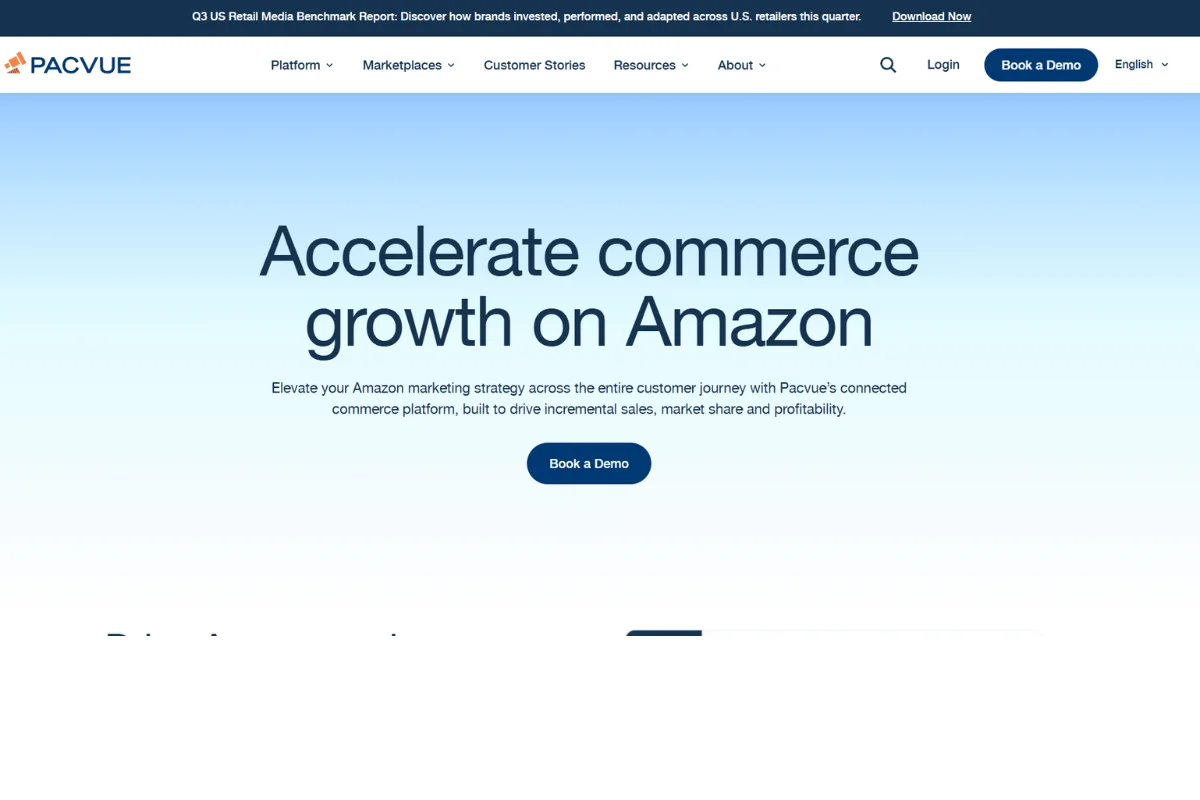
Pacvue is the enterprise-grade solution that serious sellers eventually migrate to when they outgrow simpler tools.
The platform is known for its robust multi-marketplace management capabilities and sophisticated automation features. Pacvue uses individual rule structures, meaning each campaign can have hundreds of simple IF-ELSE statements applied to it, giving you incredible flexibility in how you optimize.
The downside? That power comes with complexity. Setting up Pacvue takes more time and expertise than plug-and-play alternatives, but the payoff is significant for sellers managing large catalogs or multiple brands.
databraindayne shared on Reddit, “+1 for Pacvue. I’ve used a variety and always end up coming back to them. They’ve got the best overall platform, in my opinion, and stay towards the front with Amazon betas and whatnot. Setting up their automation and rule sets is super straightforward.”
What works well:
- Industry-leading platform for enterprise accounts
- Excellent for multi-marketplace management
- Early access to Amazon beta features
- Highly customizable rule structures
Common criticisms:
- Steeper learning curve than competitors
- Requires dedicated time to set up properly
- Custom pricing can be expensive for smaller sellers
Pricing: Custom enterprise pricing (typically based on ad spend percentage)
4. Adbrew

Adbrew has emerged as a newcomer that’s making waves with its innovative approach to rule-based optimization.
What sets Adbrew apart is how it handles rules. Unlike Pacvue’s individual rule system, Adbrew uses rulesets where campaigns only have one of each type, but with multiple instructions that create a decision tree. This allows for more complex optimization logic without overwhelming you with hundreds of separate rules.
The platform also features a “Maximum Affordable Bid” formula that factors in placement variability and historical performance to optimize bids intelligently. The UI is notably fast, which makes a huge difference when you’re managing multiple campaigns daily.
What works well:
- Fast, responsive interface
- Sophisticated ruleset system for complex strategies
- The Maximum Affordable Bid feature optimizes profitability
- Template rules provided to get started quickly
Common criticisms:
- Relatively new platform (around two years old)
- Less established track record than competitors
- May require time to learn the ruleset logic
Pricing: Subscription-based (contact for custom pricing)
5. Perpetua

Perpetua takes a different approach by focusing on hands-off automation that adjusts to your goals.
One of the most interesting features is how Perpetua modifies bids based on budget consumption throughout the day. If you’re burning through budget too quickly, it automatically scales back. If you’re underspending, it ramps up to capture more opportunities.
This makes Perpetua ideal for sellers who want to set goals and let the system work, rather than tweaking bids manually every few days. According to user BeingProfessional110 on Reddit, “we use perpetua for all our clients above 10k spend a month.”
The trade-off is less direct control. You’re trusting Perpetua’s algorithm to make the right calls, which works great when it’s dialed in but can be frustrating if you like to micromanage.
What works well:
- Budget-aware bidding adjustments throughout the day
- Good for accounts with $10k+ monthly ad spend
- Reduces daily management time significantly
- True hands-off automation for busy sellers
Common criticisms:
- Less agency and control compared to manual tools
- Black-box approach may not suit strategic sellers
- Can be expensive relative to simpler alternatives
Pricing: Subscription-based with minimum ad spend requirements
Honorable Mentions
These tools didn’t make the top five, but they’re worth knowing about depending on your specific needs:
- PPC Prophet: Phil McCarty’s tool is praised for running PPC reports and handling basic automation tasks. Heath-Thompson noted on Reddit that “PPC Prophet was the best that I came across and is good value for money. I use it to run my PPC reports and Phil who owns it is a good guy.” Best for sellers who want simple automation without complexity.
- Helium 10 Ads: Part of the larger Helium 10 suite, Adtomic offers AI-powered bid adjustments and keyword discovery. It’s solid for sellers already using Helium 10 for product research and keyword tracking, but the automation can be hit-or-miss according to user feedback.
- Advigator: Fully automated from keyword research to bid adjustment. Works well once you hit your target ACOS, but requires consistent weekly orders to function properly. Haunting-Bit-281 shared they’ve been using it for over a year with good results for stability-focused accounts.
- Sellermate.ai: Comprehensive tool combining PPC automation with organic data insights and digital shelf monitoring. blahxxblah noted they “love their support. One of the most responsive teams i’ve ever met.” Good for sellers wanting an all-in-one solution.
- Atom11: Built by ex-Amazonians with strong analytics, automated reporting, and seamless bulk operations. Mental_Football_6030 praised being able to “measure the performance of all the changes” with their compare mode feature. They were the Amazon Ads Partner Awards winner in 2024. Flat pricing puts them at an advantage.

How to Choose the Right Software for Your Business
Picking the wrong tool wastes money and time. Here’s how to make the right choice:
- Consider Your Monthly Ad Spend: Most tools price based on your ad volume, so match the tool to your budget reality and understand how Amazon PPC costs scale with different platforms.
- If you spend under $5,000/month: Look for flat-fee tools like Scale Insights, Atom11, Helium 10, or lower-tier options.
- If you spend $5,000-$20,000/month: Consider percentage-based tools like AdLabs.
- If you spend over $20,000/month: Enterprise solutions like Perpetua or Pacvue make sense.
- Evaluate Integration Needs: If you’re already using tools like Helium 10 for product research, their PPC solution integrates seamlessly. Examine the integration capabilities of Amazon Advertising PPC AI tools with your existing systems and workflows.
- Test the User Interface: Initial UI/UX experience as well as the potential learning curve of onboarding the Amazon PPC Software. Request demos before committing. Some platforms are intuitive, while others require training.
- Check Support Options: The main benefit of using Ad Badger is the human support you get. The software isn’t necessarily special, but the account managers, coaches, and consulting sessions can be useful for people trying to learn to manage their ads themselves. If you’re new to PPC, prioritize tools with strong customer support.
- Look at Feature Coverage: Do the automation or manual optimization functions support all of the Amazon ad types and their corresponding target types? Make sure the tool handles Sponsored Products, Sponsored Brands, and Sponsored Display if you use all three.
- Read Real User Reviews: Look beyond marketing materials. Check what actual users say about reliability, results, and support quality.
The right choice depends on your unique situation. There’s no universal “best” tool — only the best tool for your needs.

Advanced Amazon PPC Bid Optimization Strategies
Once you have the right software in place, these strategies take your campaigns to the next level:
- Implement Dayparting for Maximum Efficiency: If you can access the “Amazon Marketing Stream” data, you can pinpoint the most effective hours and days of the week to adjust your advertising strategy, optimizing your spending for better results. Run your bids higher during peak buying hours (typically 7-10 PM) and lower them overnight when conversion rates drop.
- Segment Campaigns by Performance: Segment 2 is all of your good campaigns that produce a lot of sales and lower your account’s average ACoS. Segment 3 is your bad campaigns; these are the ones raising your account’s overall ACoS and producing a smaller number of sales. Increase budgets on winners, decrease budgets on underperformers.
- Master the Revenue Per Click (RPC) Metric: Revenue Per Click (RPC) is a crucial metric — it tells you exactly how much revenue each click generates, helping you make smarter bidding decisions. Calculate RPC by dividing total sales by total clicks, then use it to set maximum bids that maintain profitability.
- Balance Target ACoS with Business Goals: Unlike Google Ads, where your SEO and ad performance are separate, Amazon PPC is tightly intertwined with organic performance. Simply put, if you bid more on a keyword, it can directly influence your organic rankings for that keyword. Sometimes accepting a higher ACoS temporarily makes sense if it improves organic rank and overall return on ad spend (RoAS).
- Test Single Keyword Campaigns for Top Performers: Granular single keyword, single ASIN, single match-type campaigns that auto-optimize in real time. Your best converting keywords deserve their own campaigns with dedicated budgets.
Remember: the best strategy combines software automation with human insight. Let the tools handle the tedious work while you focus on strategy with these Amazon advertising tips.

Frequently Asked Questions (FAQs)
Below are answers to common questions about Amazon PPC bid optimization software.
Can PPC Optimization Software Guarantee Lower ACoS?
No. No reputable provider makes guarantees because too many factors outside software control determine outcomes. Product market fit, listing quality with reviews and images, shifts in competition, and seasonality all influence results more than algorithms.
More importantly, focusing solely on ACoS can be misleading. You need to look at the bigger picture, including what constitutes a healthy Amazon TACoS (Total Advertising Cost of Sales), which factors in your organic sales alongside ad performance.
How Long Does It Take to See Results From Automated Bid Management?
Initial results appear within three to seven days, but meaningful performance trends emerge after two to four weeks. Campaigns typically stabilize in one to three months as the software learns your products and optimizes bids.
Long-term success requires continuous Amazon PPC optimization over six months or more.
Is It Worth Switching From Manual to Automated Bid Management?
For sellers spending reasonable amounts monthly on ads, yes. Break-even typically occurs within several months, with positive returns continuing afterward.
Time savings alone often justify investment. Manual management consumes serious weekly hours. Performance improvements add another dimension through waste reduction and better targeting.
However, sellers with very low ad spend often find manual management more cost-effective since fixed fees consume disproportionate budget percentages.
What Is the Minimum Ad Spend Required for Most PPC Tools?
There is no single minimum ad spend required for most Pay-Per-Click (PPC) tools, as the threshold varies based on your business goals and circumstances.
However, experienced PPC specialists on Reddit generally agree on practical benchmarks:
-
- Under $1,000/month: DIY management is most cost-effective. User Legitimate_Ad785 notes, “I say min $1000. Ads have become so complicated that if ur not professional, your chance of failure is 80%.”
- $1,000-$2,500/month: The lower threshold where professional help starts making sense. User londesdigital states: “I place the cutoff at around $2000/month. Over that, you can justify paying an agency $400/month or so.”
- $2,500+/month: Agency owner TTFV recommends “a budget of at least $2,500/month per ad platform” to reduce overhead and provide enough conversion data for proper optimization.
- $5,000+/month: Where professional management becomes clearly worthwhile. User Single-Sea-7804 confirms: “It wouldn’t make the most sense if you’re spending at least $5k USD per month.”
The key factor: management fees typically run 15-25% of ad spend, so ensure this still allows profitable margins for your business.
For guidance on determining your optimal budget, see our detailed breakdown of how much to spend on Amazon PPC.
How Do These Tools Handle Amazon’s API Rate Limits?
Quality PPC tools handle Amazon’s API rate limits automatically through request batching, smart scheduling, and caching frequently accessed data. The software spaces out API calls and includes error handling to retry requests when limits are hit.
Conclusion
Software handles automation, but strategic PPC needs human expertise. The right tool cuts waste, but the right partner turns campaigns into profit machines.
IG PPC combines over a decade of Amazon PPC specialization with white-glove service. Founded by Isaac Gross, a long-time Amazon seller, the agency maintains over 95% client retention, serving serious sellers with seven to nine-figure accounts.
Ranked No. 829 on the 2025 Inc. 5000 list of America’s fastest-growing companies, IG PPC has proven its track record managing over $3 billion in annual sales.
With us, you get a dedicated account manager who knows your products down to the ASIN level, not just software churning through data. Get your free Amazon PPC audit and stop the ad spend leaks today.